
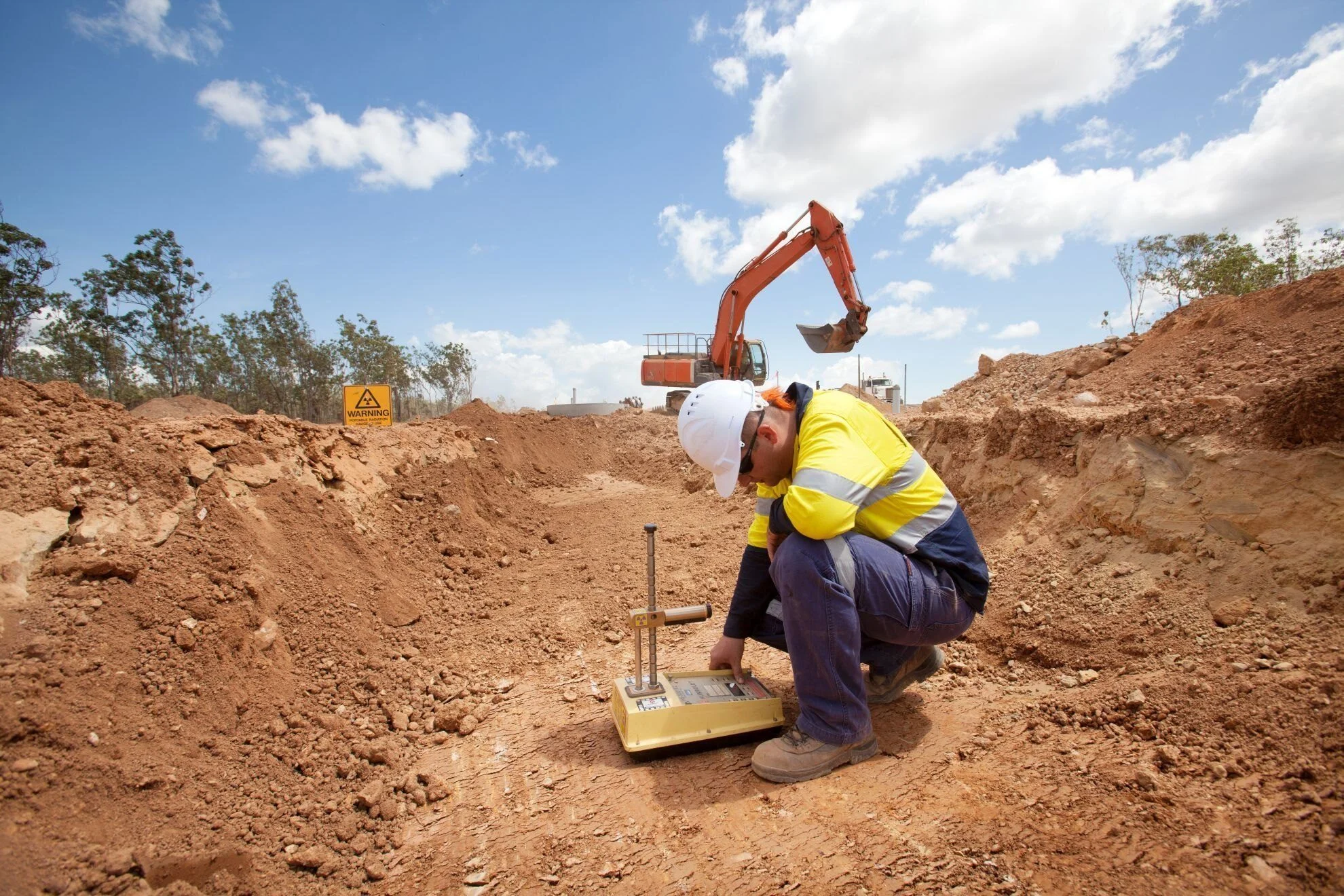
Walk onto any active site in Lekki, Asaba, or Karu today and you’ll notice something different from a decade ago. The borehole rig is still there, but so is a drone mapping the topsoil, a technician logging cone penetration data on a tablet, and a contractor asking about ground improvement instead of simply specifying a deeper pile. Geotechnical engineering trends are no longer abstract industry talk — they’re showing up in tender documents, site investigation reports, and the decisions that determine whether a foundation costs ₦8 million or ₦25 million.
This shift matters because Nigeria’s ground conditions are unforgiving in places that matter most: the reclaimed sands of Lagos’s coastal corridor, the soft alluvial deposits of the Niger Delta, and the variable lateritic profiles of the Middle Belt. Engineers who track current geotechnical engineering trends make better decisions earlier — before piling rigs mobilise, before concrete is ordered, and before a client discovers a settlement problem two years after handover. This article walks through what’s changing, how it applies on Nigerian sites, and what it means for your next project.
Geotechnical Engineering Trends: Quick Answer
Current geotechnical engineering trends include wider use of cone penetration testing (CPT) alongside standard penetration tests (SPT), ground improvement methods like vibro stone columns and dynamic compaction, digital site investigation tools, and climate-adjusted designs for flood-prone areas. In Nigeria, these trends are driven by taller buildings, coastal development, and stricter adherence to BS EN 1997 and NIS 13:2021 standards.
What Geotechnical Engineering Trends Actually Mean for Site Investigation
Geotechnical engineering is the branch of civil engineering that studies how soil and rock behave under load, and how that behaviour governs the design of foundations, retaining structures, slopes, and earthworks. The “trends” label gets attached to a fairly specific set of changes: how ground conditions are investigated, how the resulting data is processed, and how that data feeds into foundation decisions.
For decades, the standard Nigerian site investigation followed a predictable pattern — a series of boreholes drilled to 15 or 20 metres, standard penetration tests (SPT) taken at 1.5-metre intervals, and disturbed samples sent to a laboratory for index testing. This approach still forms the backbone of most reports submitted for foundation design, and it remains acceptable under NIS 13:2021 for many building categories. What’s changed is what gets added on top of it.
The Shift Toward Continuous Profiling
SPT gives you a data point every 1.5 metres. Between those points, the soil profile is interpolated — and on sites with thin clay lenses, loose sand pockets, or peat layers (common in Ajah, Sangotedo, and parts of the Lekki Peninsula), that interpolation can hide a layer that governs settlement behaviour entirely. Cone penetration testing (CPT) addresses this by recording cone resistance and sleeve friction continuously as the probe advances, producing a profile with readings every 20mm rather than every 1.5 metres.
On a recent piled raft assessment for a 12-storey residential tower in Victoria Island, a CPT sounding identified a 0.6-metre soft clay band at 9.2 metres depth that two adjacent boreholes had effectively skipped over. That single layer changed the settlement calculation for the raft by close to 18mm — enough to push the design toward a piled solution rather than a raft alone. This is the practical value behind the trend: better resolution, fewer surprises during construction.
Geophysical Methods as a Screening Tool
Electrical resistivity surveys and seismic refraction are increasingly used as a screening layer before boreholes are positioned. Rather than drilling at a fixed grid spacing regardless of what’s underground, geophysical surveys map variations in the subsurface across a wider area at lower cost per square metre. Boreholes are then targeted at anomalies — zones of unusually low resistivity that might indicate a buried channel, a soft clay pocket, or a void from old quarry workings, which is a real concern on sites near Abeokuta and parts of Ogun State with a history of quarrying.
Ground Improvement: The Technical Core of Current Trends
If there’s one area where geotechnical engineering trends have moved fastest in Nigeria over the past five to seven years, it’s ground improvement. Where engineers once defaulted to deep piling whenever bearing capacity at shallow depth was inadequate, ground improvement now offers a genuine alternative — often at lower cost and faster programme.
Vibro Stone Columns
Vibro stone columns involve driving a vibrating probe into loose or soft ground and backfilling the resulting hole with compacted granular material, typically crushed rock or gravel, in lifts. The columns increase the overall stiffness of the ground, accelerate consolidation of soft clays, and provide a degree of reinforcement against liquefaction in saturated sands. For warehouse and light industrial developments on reclaimed land along the Lagos-Badagry corridor, vibro stone columns have become a standard line item in geotechnical recommendations, typically installed on a 2.0 to 2.5-metre triangular grid to depths of 8 to 12 metres.
Dynamic Compaction and Preloading
Dynamic compaction — repeatedly dropping a heavy weight (commonly 8 to 20 tonnes) from height onto the ground surface — densifies loose granular fills and reclaimed sand. It’s a blunt method, but an effective one, and it’s increasingly specified for large reclaimed plots before pad or strip foundations are cast. Preloading, by contrast, uses surcharge fill (sometimes combined with vertical drains) to pre-consolidate soft clay layers before permanent loads are applied, reducing post-construction settlement that would otherwise occur over years.
Soil Stabilisation with Lime and Cement
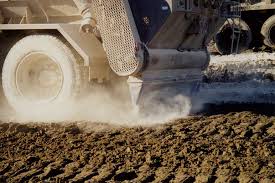
For road subgrades and pavement foundations across the Middle Belt and northern states, lime and cement stabilisation of expansive lateritic clays addresses a problem that’s specifically Nigerian: black cotton soils that swell and shrink dramatically with seasonal moisture changes. Stabilisation rates of 4-8% lime by dry weight are common, transforming a problematic subgrade into one with a California Bearing Ratio (CBR) suitable for direct pavement construction — a significant cost saving compared to excavation and replacement.
The Nigerian Regulatory and Ground Reality
Geotechnical engineering trends don’t arrive in a vacuum — they’re shaped by what the ground gives you and what the regulations require. In Nigeria, NIS 13:2021 (the Nigerian Industrial Standard for the structural use of soil and rock) sits alongside BS EN 1997 (Eurocode 7) and the older BS 8004, which many practising engineers still reference for foundation design. COREN-registered engineers are expected to produce geotechnical reports that satisfy whichever standard the approving authority — state development control offices in Lagos, Abuja, Rivers, and elsewhere — adopts as reference.
Ground conditions vary enormously across the country, and trends that make sense in one city may be irrelevant in another. In Lagos, the dominant concern is soft to firm clay and loose sand over reclaimed land, particularly along the Lekki-Epe axis, where groundwater is often within 1.5 metres of the surface. Piled foundations — driven, bored, or screw piles — remain the default for anything above four storeys, but ground improvement is increasingly used to support the ground floor slab and lighter ancillary structures, reducing the number of piles required overall.
In Abuja and much of the Federal Capital Territory, residual lateritic soils over weathered basement complex rock dominate. Bearing capacities here are often higher at shallower depth, but the variability of weathering profiles means that a borehole 10 metres from another can show a markedly different rock head level — a reason geophysical screening has gained traction in FCT site investigations specifically.
Port Harcourt and the wider Niger Delta present perhaps the most demanding conditions in the country: soft, highly compressible marine and alluvial clays, often extending 15 to 30 metres or more, with peat layers and high water tables. Here, the trend toward continuous CPT profiling and consolidation testing (oedometer tests to determine compression and consolidation parameters) isn’t optional — it’s the difference between a foundation that performs and one that settles unevenly over the structure’s life. Engineers working in this region increasingly reference our overview of what geotechnical engineering involves when briefing clients unfamiliar with why investigation costs run higher here than elsewhere.
Common Challenges, Mistakes, and Cost Factors
Despite the move toward better testing and ground improvement, the same mistakes recur across Nigerian sites — and they’re worth naming directly because they drive cost overruns more than almost anything else.
The most frequent issue is an inadequate site investigation scope relative to project size. A client building a four-storey block on a 600m² plot in Ikeja might commission only two boreholes to 12 metres because that’s what the previous developer on the adjacent plot did. But adjacent plots can have entirely different fill histories, especially in areas reclaimed at different times. A borehole spacing of one per 300-400m² of footprint, with at least one extending to a depth equal to 1.5 times the foundation width below the founding level, is a reasonable starting point — though final spacing should reflect ground variability observed during drilling.
A second recurring problem is treating the geotechnical report as a formality rather than a design input. Reports get filed, structural drawings get produced from assumed bearing values, and the actual recommendations — say, a requirement for vibro compaction before pad foundations are cast — get dropped during value engineering because nobody connects the line item in the geotechnical report to the structural design assumption it underpins.
On cost, a typical site investigation for a medium-sized commercial building in Lagos — say four to six boreholes to 15-20 metres, SPT at standard intervals, and a full suite of laboratory tests (Atterberg limits, particle size distribution, moisture content, triaxial shear strength) — runs broadly in the range of ₦2.5 million to ₦6 million depending on access, depth, and groundwater conditions. Adding CPT soundings typically adds ₦150,000 to ₦300,000 per sounding. Ground improvement costs vary widely: vibro stone columns might add ₦8,000-₦15,000 per linear metre of column depending on diameter and ground conditions, while dynamic compaction is usually priced per square metre of treated area, often ₦3,000-₦6,000/m² for multiple passes. These figures move with fuel and logistics costs, so always confirm current rates with contractors before finalising a budget. For a fuller breakdown, our guide to common geotechnical engineering challenges covers how these issues compound on real projects.
Best Practices for Applying Current Trends on Your Project
Knowing the trends is one thing; applying them sensibly on a specific site is another. Here’s how to approach it if you’re a site engineer, project manager, or client trying to make sense of a geotechnical report and what it implies for your foundation choices.
- Match investigation depth to structure, not to habit. A 15-metre borehole might be perfectly adequate for a bungalow on firm lateritic soil but dangerously shallow for a 10-storey tower on reclaimed coastal land. Confirm that borehole depths extend below the zone of significant stress influence from your foundation type.
- Request CPT alongside SPT on variable or coastal sites. The marginal cost is small relative to the value of catching a thin weak layer before it becomes a settlement problem during construction.
- Treat ground improvement recommendations as design inputs, not optional extras. If the geotechnical report specifies vibro compaction or preloading, make sure the programme and budget reflect it before structural drawings are finalised — retrofitting ground treatment after a structure is partly built is far more expensive than building it in from the start.
- Account for groundwater seasonality. Many Lagos sites show groundwater levels that shift by 1-2 metres between dry and wet seasons. A site investigation conducted in February (dry season) may understate the groundwater challenge your foundation excavation will face in July.
- Build in settlement monitoring for sensitive structures. For buildings adjacent to existing structures, or founded on improved ground, simple settlement markers checked monthly during and after construction provide an early warning system that costs little compared to remedial underpinning.
Following these steps doesn’t guarantee a problem-free project, but it closes the gap between what current geotechnical engineering trends recommend in principle and what actually happens on a Nigerian site. For a structured walkthrough, see our best practices for geotechnical engineering resource, and pair it with our foundation design guide when you’re ready to move from investigation to design.
Frequently Asked Questions About Geotechnical Engineering
Q: What is geotechnical engineering in civil engineering?
A: Geotechnical engineering is the branch of civil engineering concerned with how soil and rock behave under load, and how this behaviour informs the design of foundations, retaining walls, slopes, and earthworks. It involves site investigation, laboratory testing of soil samples, and analysis to determine safe bearing capacities and expected settlement.
Q: How does cone penetration testing (CPT) work?
A: A cone-tipped probe is pushed into the ground at a constant rate, typically 20mm per second, while sensors continuously record cone resistance and sleeve friction. This produces a detailed profile of soil strength and type with depth, with readings every 20mm, compared to the 1.5-metre intervals typical of standard penetration testing.
Q: What are the geotechnical investigation requirements in Nigeria?
A: Nigerian practice generally follows NIS 13:2021 alongside BS EN 1997 and BS 8004, requiring boreholes positioned according to plot size and structure type, standard penetration tests at regular intervals, and laboratory testing for index properties and shear strength. State development control authorities, such as those in Lagos and the FCT, typically require a geotechnical report as part of building approval for structures above a certain height or footprint.
Q: How much does a geotechnical site investigation cost in Nigeria?
A: For a medium-sized commercial building, a standard investigation with four to six boreholes to 15-20 metres depth, including SPT and a full laboratory test suite, typically costs between ₦2.5 million and ₦6 million. Adding CPT soundings, geophysical surveys, or extending borehole depth for tall buildings increases this figure, and costs vary with access, location, and current fuel and logistics rates.
Q: What is the difference between vibro stone columns and dynamic compaction?
A: Vibro stone columns involve installing columns of compacted granular material into the ground to reinforce and stiffen soft or loose soil, typically to depths of 8-12 metres on a regular grid. Dynamic compaction densifies loose granular soils from the surface by repeatedly dropping a heavy weight, usually 8-20 tonnes, and is generally used for shallower, less cohesive deposits like reclaimed sand fills.
The geotechnical engineering trends shaping Nigerian construction today aren’t driven by fashion — they’re driven by ground conditions that have always been difficult, met with tools and methods that finally make sense of them. Continuous profiling through CPT, geophysical screening, and ground improvement methods like vibro stone columns and dynamic compaction give engineers a clearer picture of what’s underground and more options for dealing with it, often at lower cost than blanket piling.
The practical takeaway is simple: match your investigation scope to your structure and site history, treat ground improvement recommendations as binding design inputs rather than negotiable line items, and account for Nigeria’s seasonal groundwater swings. If you’re planning a project and want a site-specific assessment of which geotechnical engineering trends apply to your ground conditions, get in touch with StruviaCore — our team can review your site history, recommend an investigation scope, and connect the findings directly to your foundation design.
Leave a Reply