
-
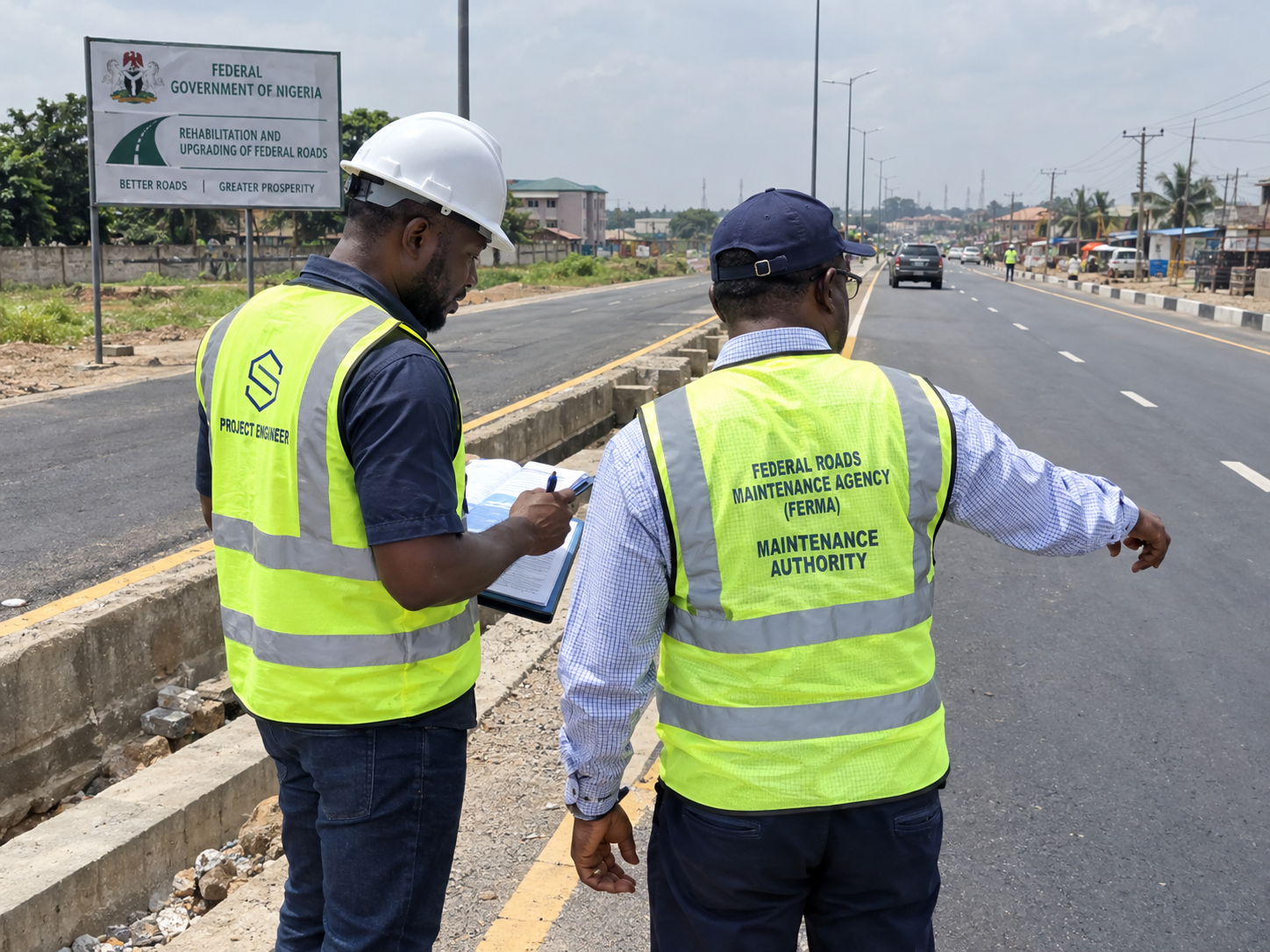
A pavement can be designed correctly, with sound CBR data, the right Road Note 31 layer thicknesses, and a materials specification that accounts for Nigeria’s rainy season, and still fail within its first two years for reasons that have nothing to do with the design itself. A contractor selected on lowest bid without capacity verification…
-
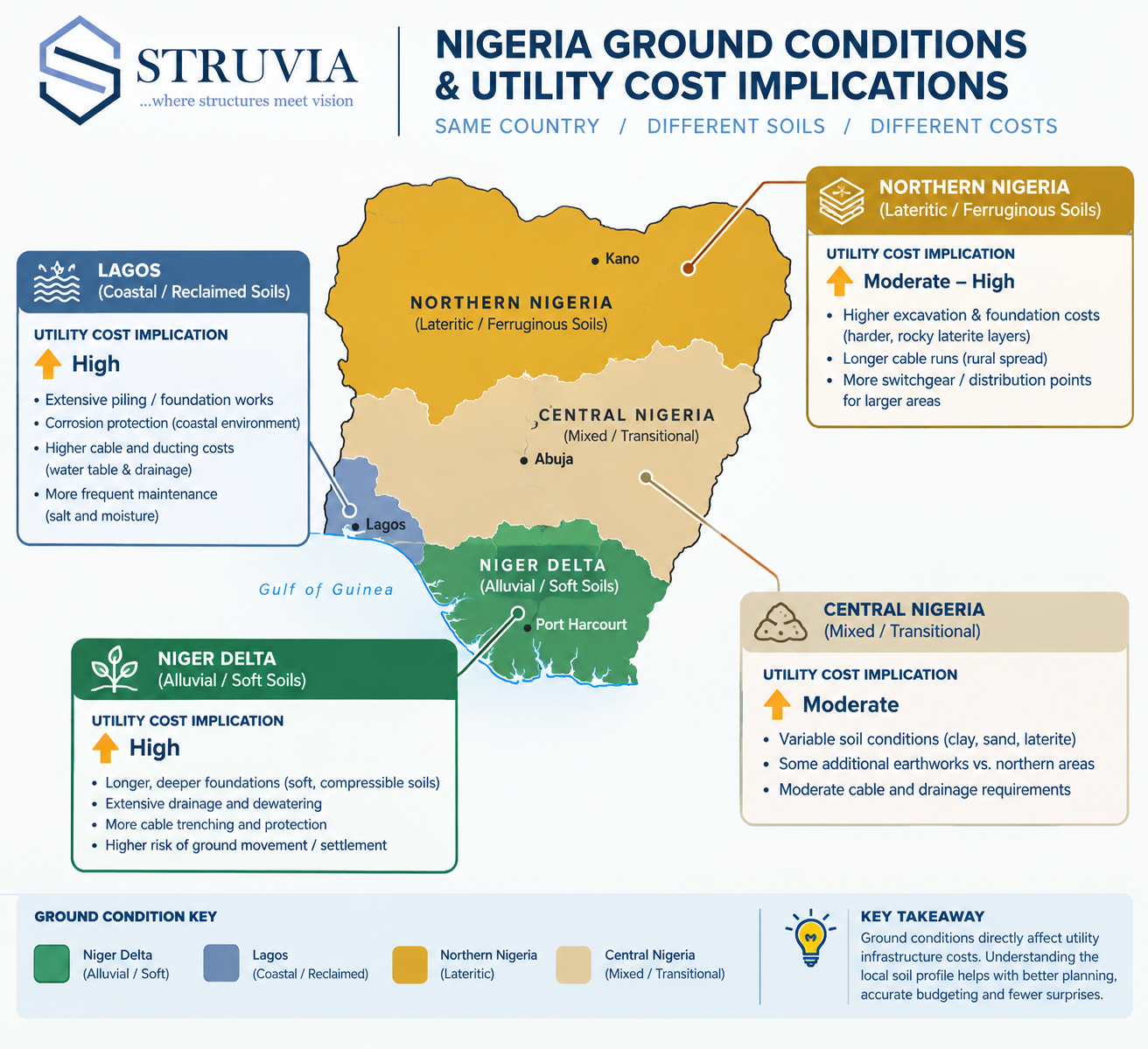
Two sites of near-identical size, ten kilometres apart in the same state, can carry utility budgets that differ by a wide margin, and the reason rarely shows up in a generic per-square-metre allowance. One sits on firm lateritic ground with a shallow water table and a straightforward Discos connection nearby. The other sits on soft…
-
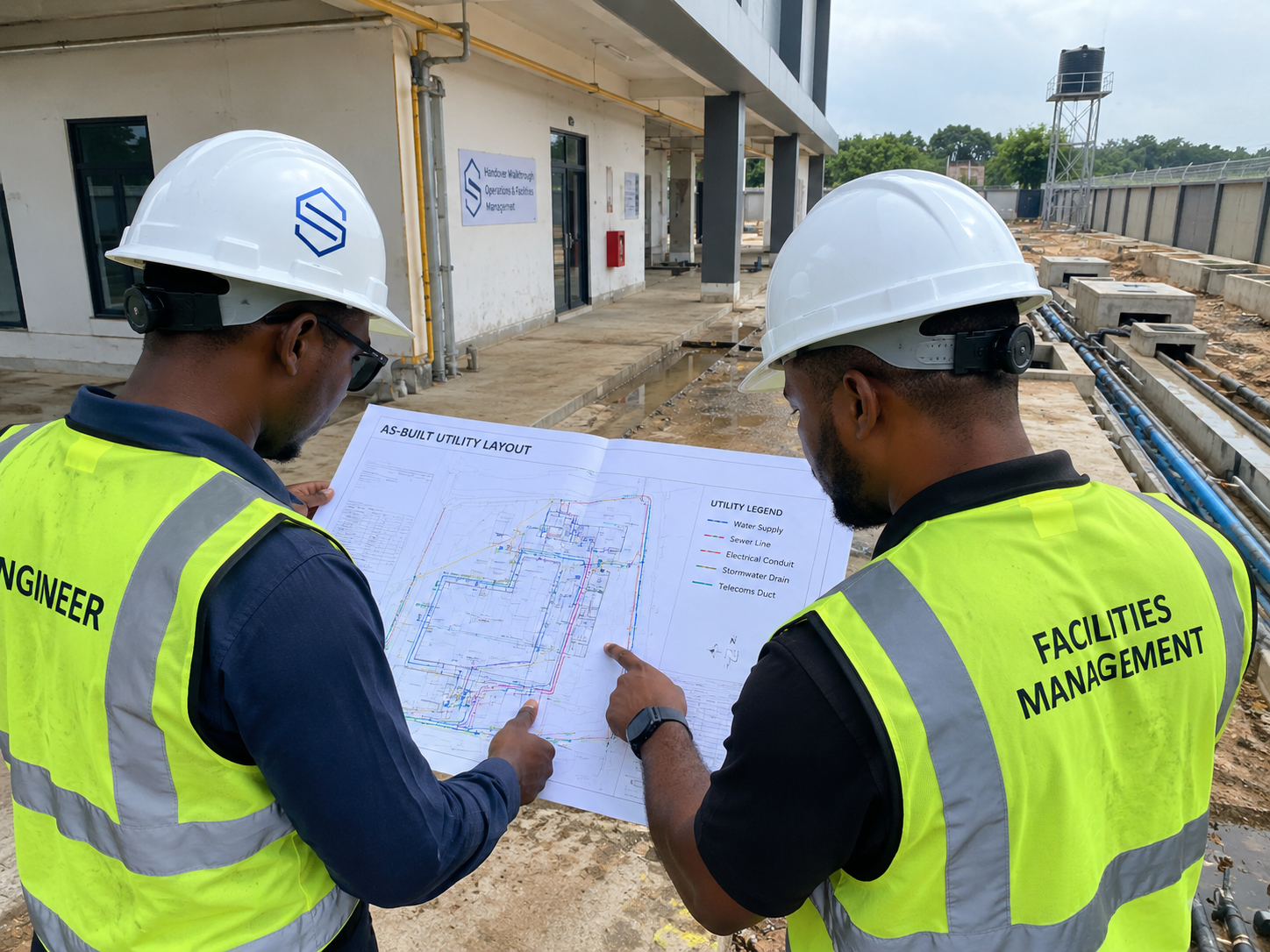
A backhoe operator in Port Harcourt cuts into an unmapped 415V cable while excavating for a culvert. Power to three streets goes down, the site closes for a Discos investigation, and the contractor spends two weeks negotiating a reconnection fee before work resumes. Most utility guidance a project team encounters covers one phase and stops.…
-
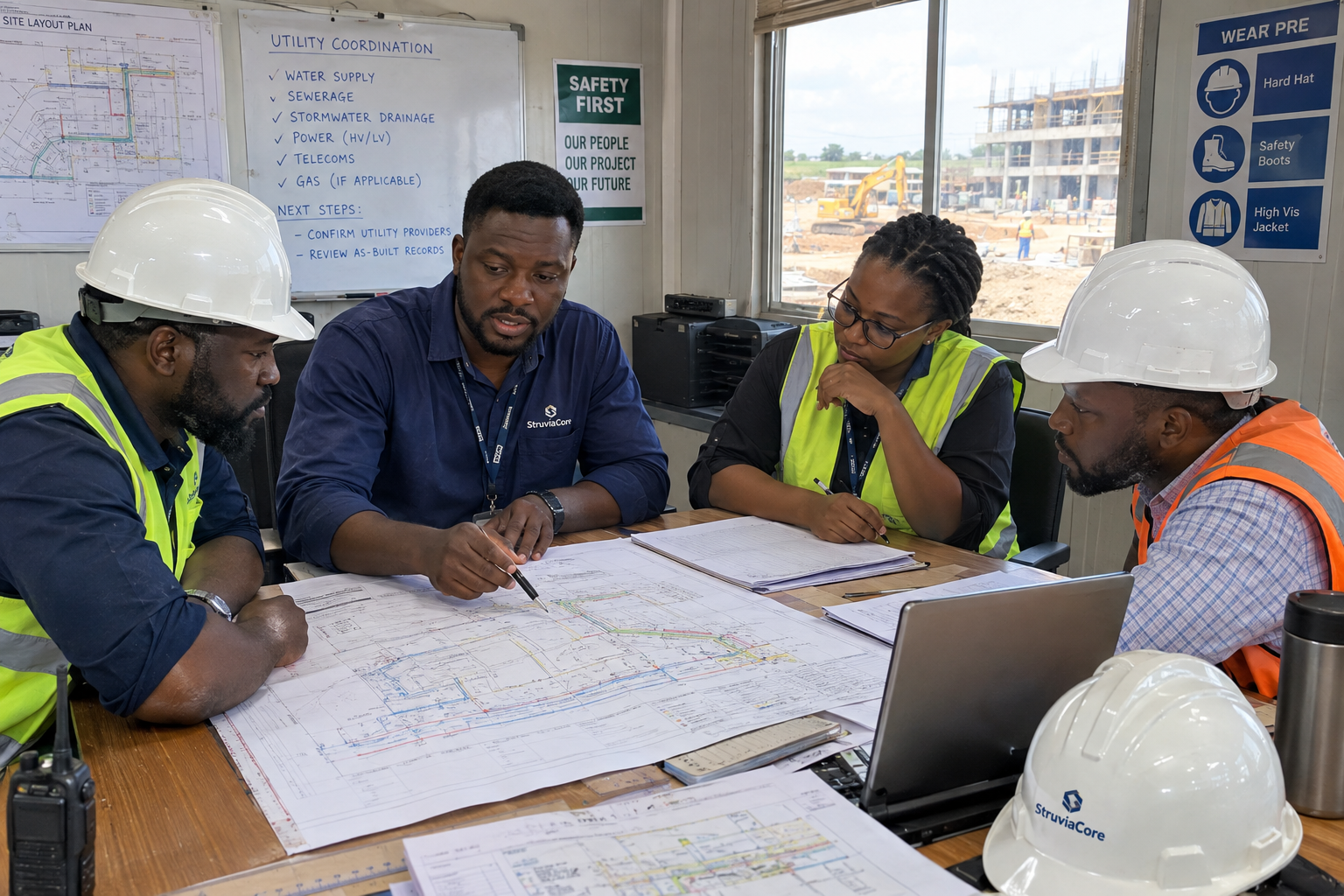
Utility Infrastructure Explained: What Site Teams Need to Know A project manager pricing a new distribution warehouse outside Ibadan treats “utilities” as a single line item: connect water, connect power, done. Six weeks into earthworks, the team discovers a buried telecom duct nobody priced for, a water main whose owner takes a month to respond…
-
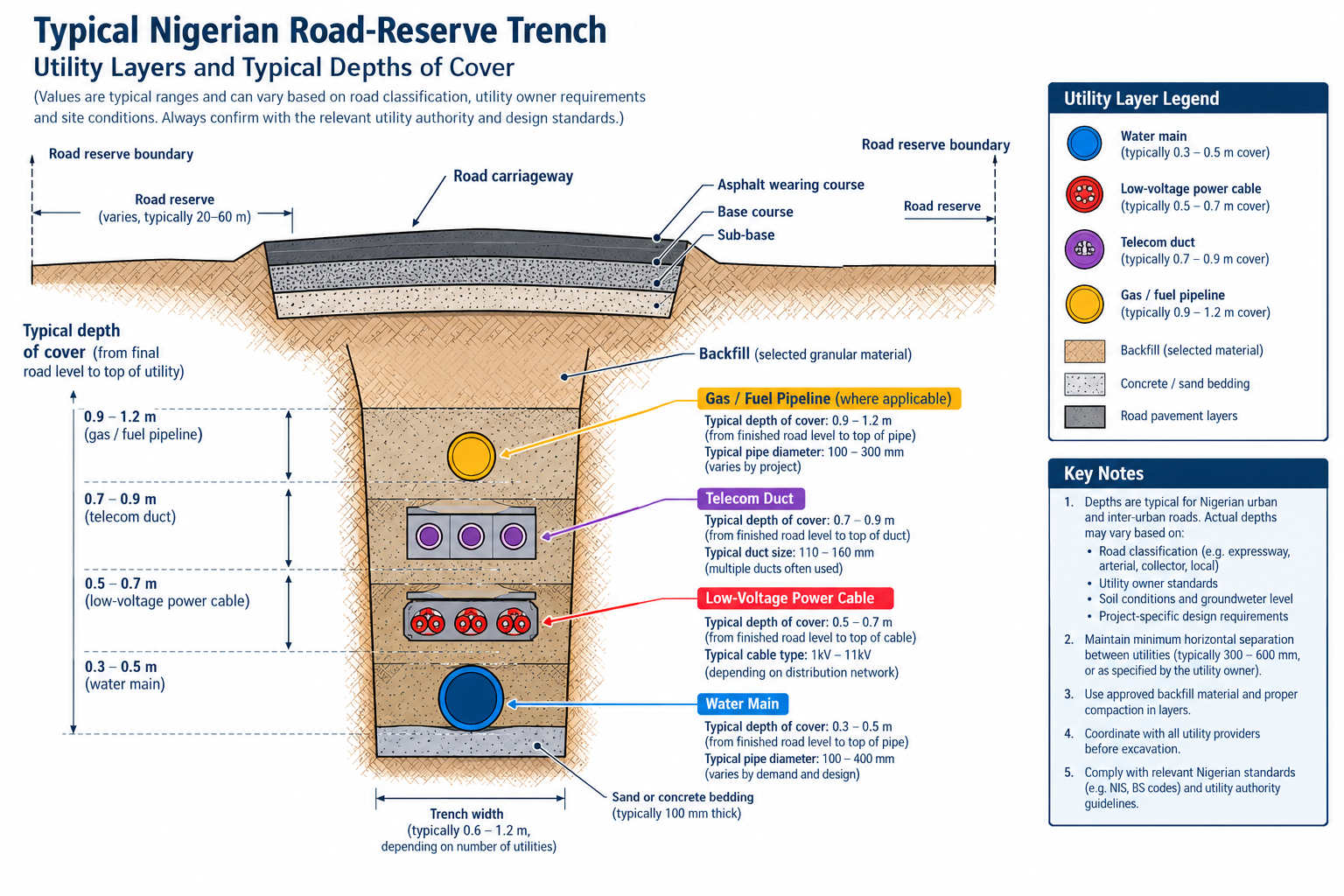
A backhoe operator in Port Harcourt cuts into an unmapped 415V cable while excavating for a culvert. Power to three streets goes down, the site closes for a Discos investigation, and the contractor spends two weeks negotiating a reconnection fee before work resumes. None of this happens because anyone was careless. It happens because nobody…
-
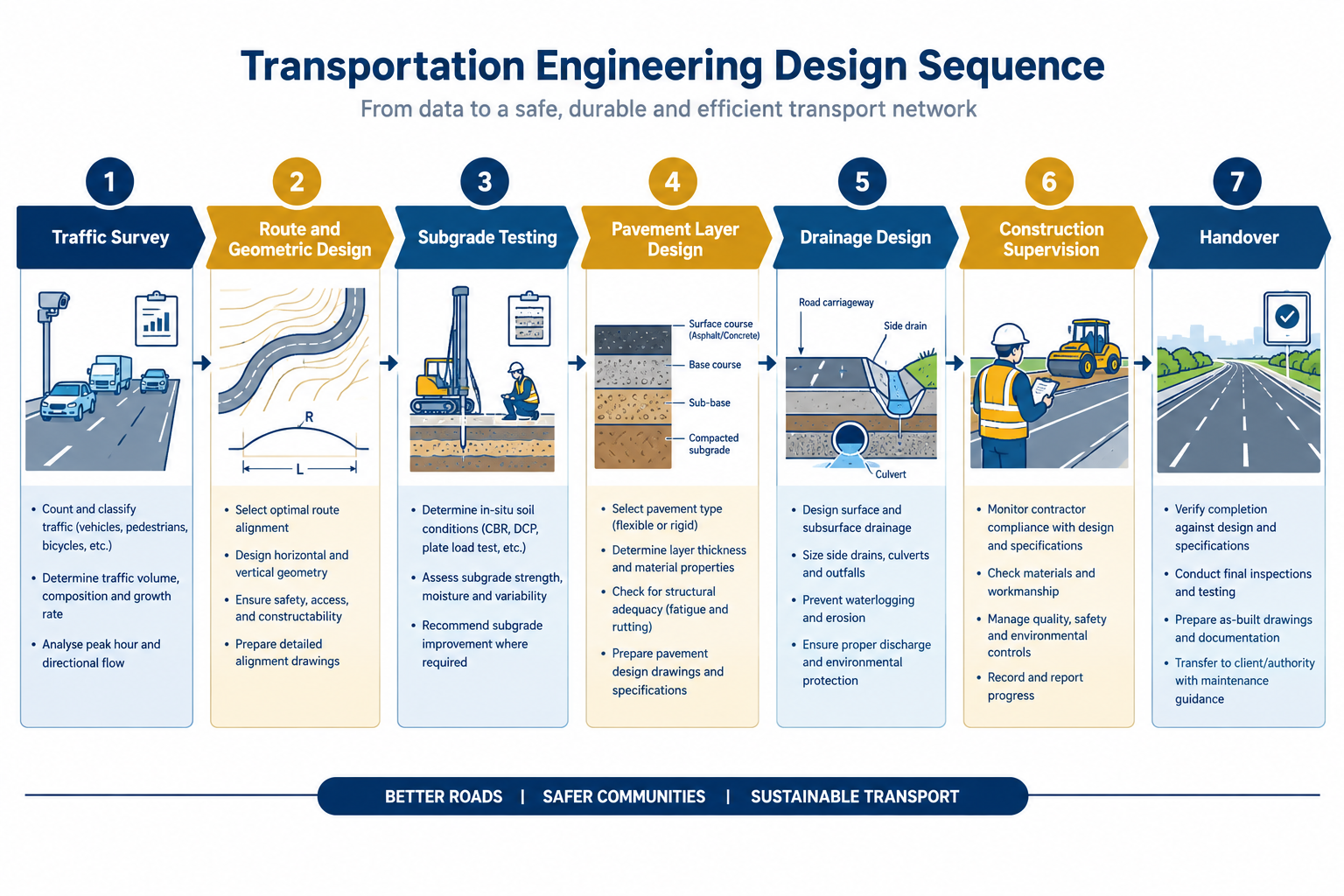
Transportation engineering best practices cover route design, pavement layers, drainage, and COREN standards — see how they build lasting Nigerian roads.
-
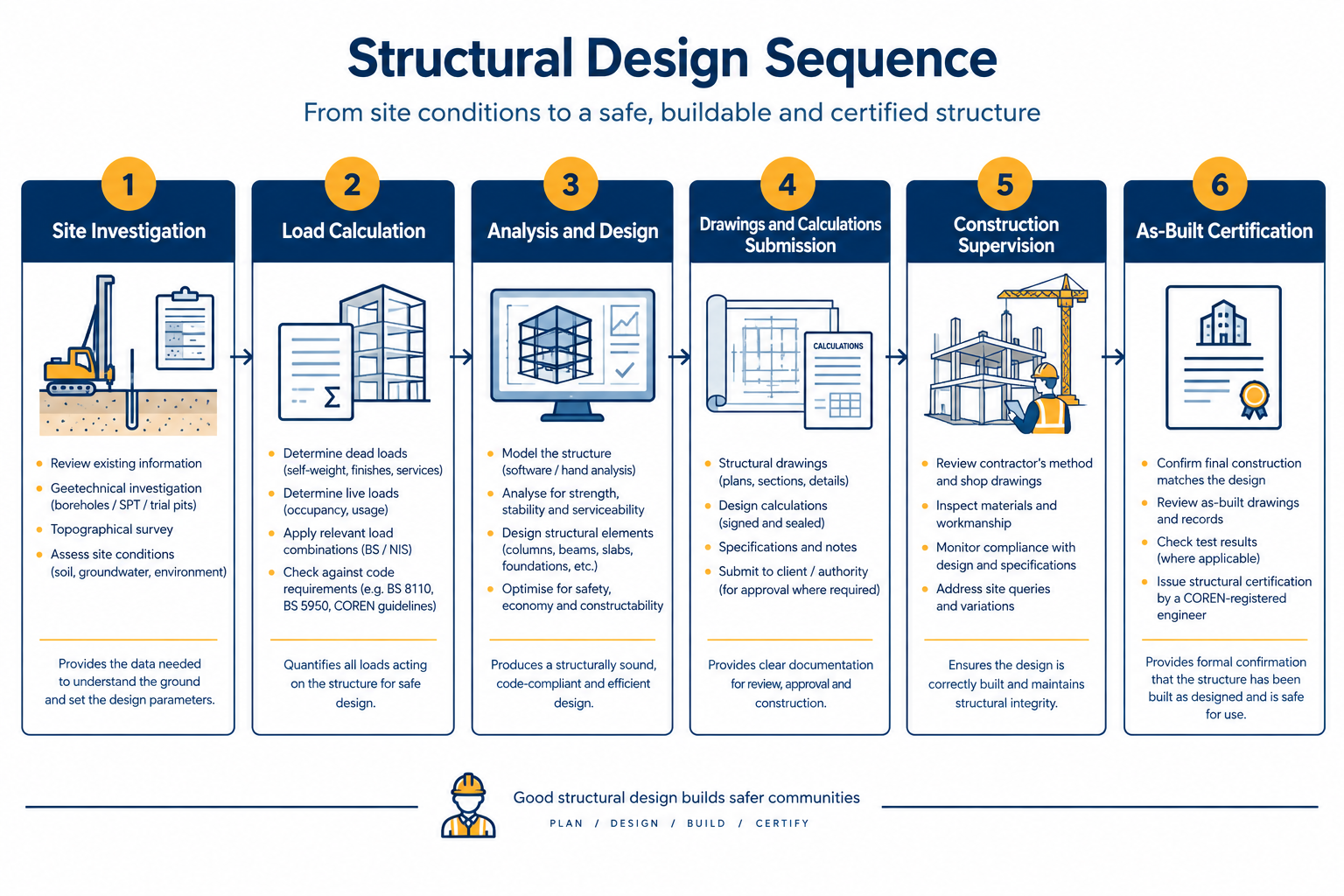
A practical structural engineering guide to design principles, Nigerian codes, common pitfalls, cost factors, and a checklist for safer, compliant builds.
-

Every civil engineer eventually stands at a site where the drainage cannot handle the rain that actually falls — a culvert sized for a smaller catchment now serving three times the paved area, or a borehole yielding less water each dry season as the surrounding aquifer draws down. These are water resources problems, and they…
-

A client in Lagos recently asked why two structural engineering proposals for the same six-storey residential block differed in fee by almost 40%, even though both promised an identical reinforced concrete frame. The cheaper proposal reused a generic foundation detail from an unrelated site and skipped a full soil investigation. The other included borehole testing,…
-
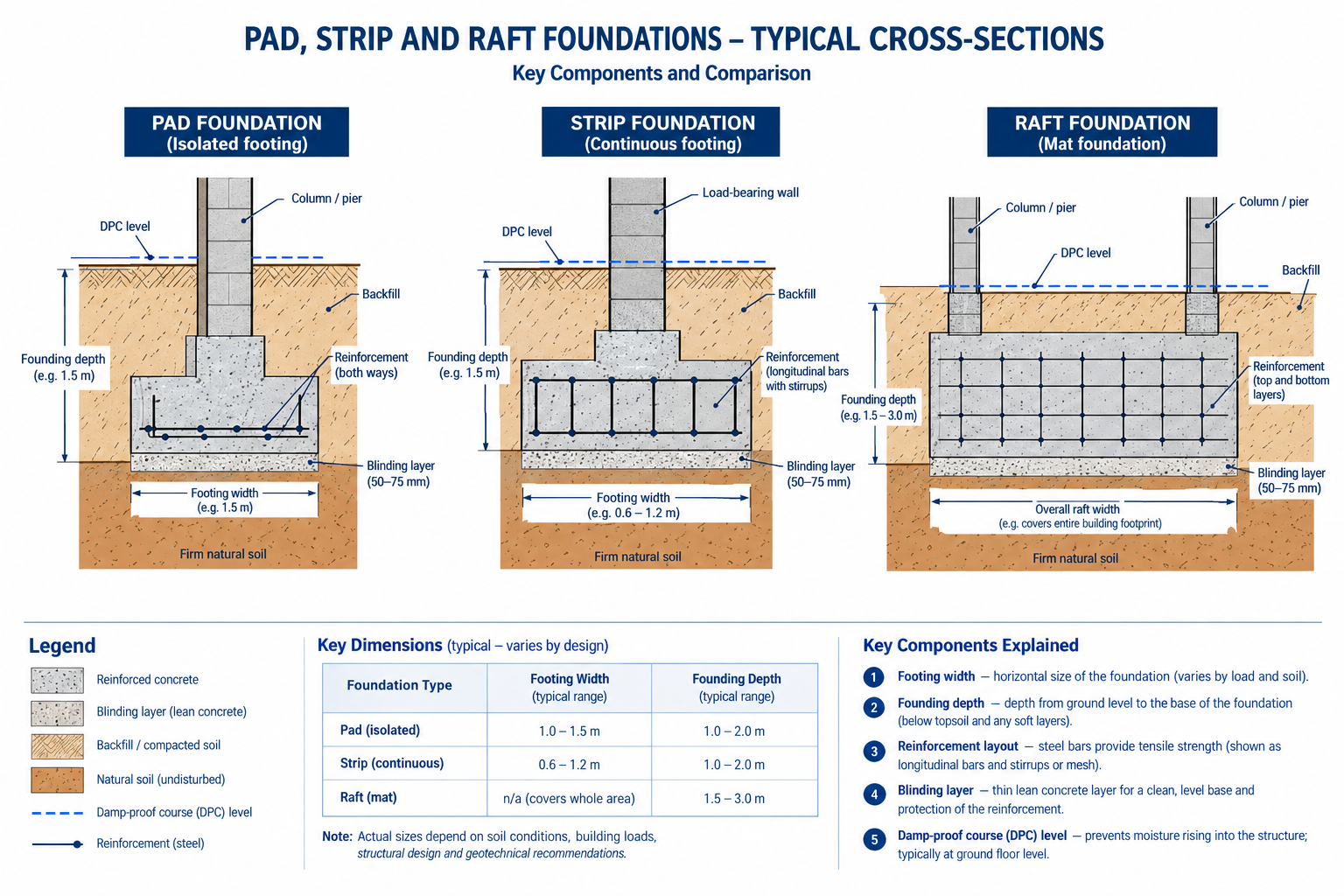
A three-storey residential building in a fast-growing part of Lagos develops a diagonal crack running from a ground-floor window toward the roofline eighteen months after handover. The concrete strength tests come back fine. The steel detailing matches the drawings. The problem sits below grade: the original design assumed a safe bearing capacity the site’s soft,…
-

A structural design can look flawless on paper and still crack, settle, or fail once construction starts, because nobody understood how geotechnical engineering works before the drawings were finalised. Contractors from Lagos to Dubai to London run into this every year: a raft foundation that settles unevenly on one corner, a piling rig that refuses…
-

A three-storey commercial building in a fast-growing Nigerian city develops a visible crack along its rear wall on a Tuesday afternoon. By the time a structural engineer is called in, tenants have been occupying the building for six months with no monitoring in place — no strain gauges, no tilt sensors, no early alert to…
-

A field technician in a Lagos distribution company still climbs several flights of stairs each month to read an analogue meter by torchlight, while three streets away a burst water main has been leaking since Tuesday and nobody at the utility company knows it yet. Both problems share the same root cause: the network cannot…
-

A civil engineer submitting a residential layout for approval in Lekki, Lagos, finds that the site sits inside a floodplain the 2015 zoning map never flagged. The stormwater drain downstream was sized for half of today’s built density, and every extra square metre of paved surface pushes runoff past its design capacity. This is not…
-
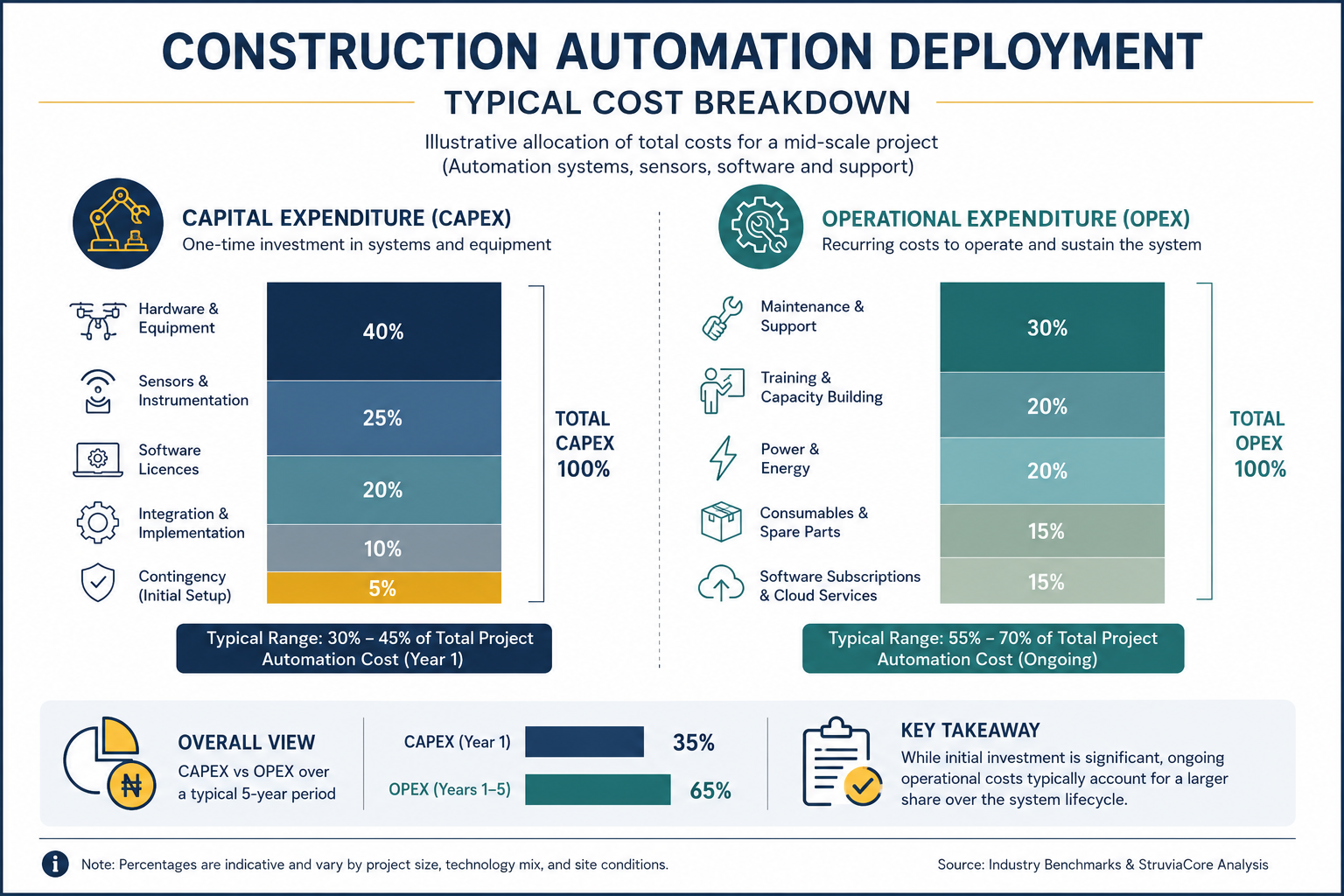
A site engineer in Lagos gets two numbers on the same afternoon: a quote for a robotic rebar-tying unit and the monthly wage bill for the four labourers it would replace. The machine costs more than the crew earns in a year. On paper, that looks like an easy decision — until the maintenance contract,…
-
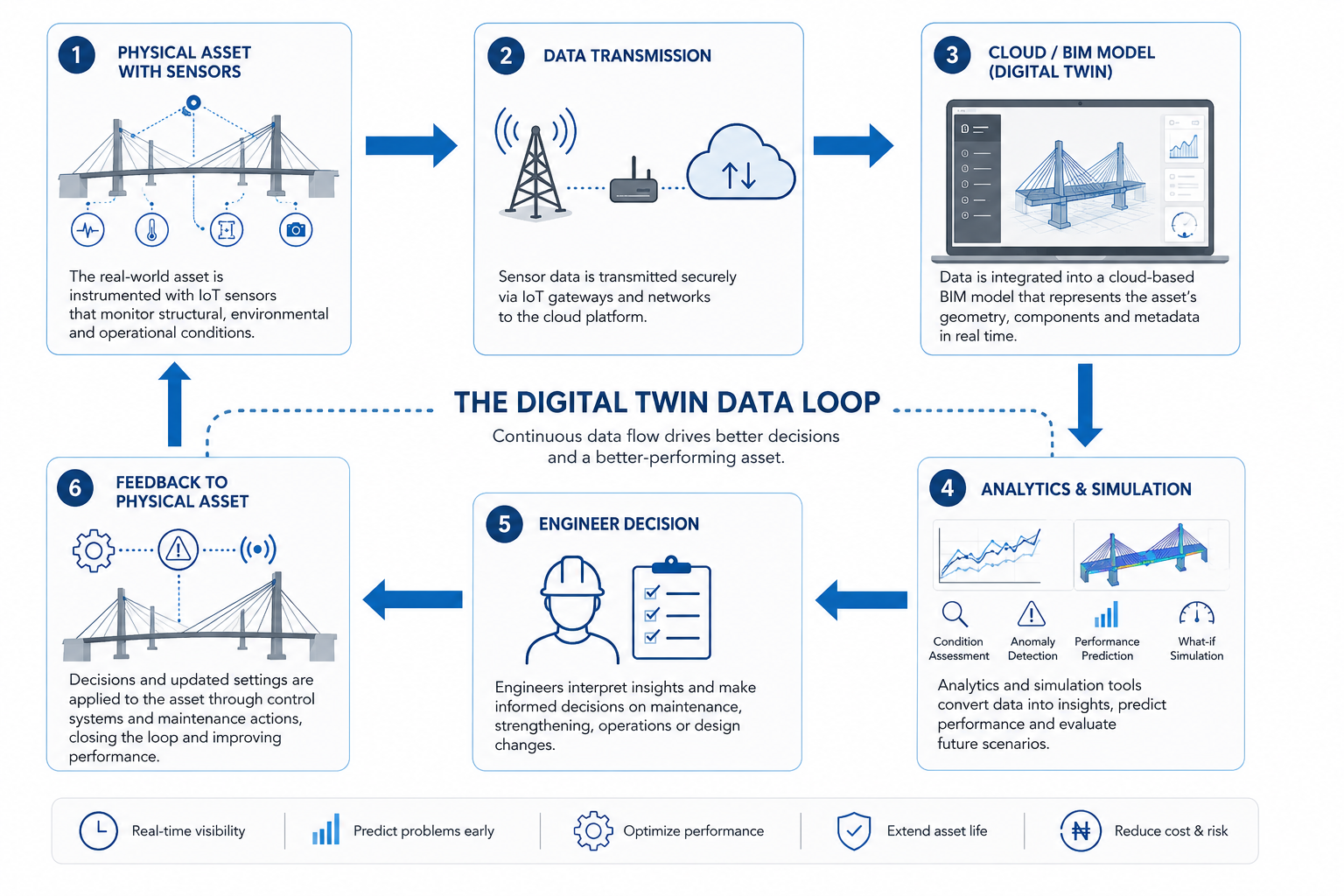
A site engineer in Lagos watches a dashboard update in real time as a bridge deck sensor reports a 2mm deflection under peak traffic load. Two thousand kilometres away, a facilities manager in Dubai reviews a 3D model that shows exactly which chiller unit in a 40-storey tower is drawing more power than its design…
-
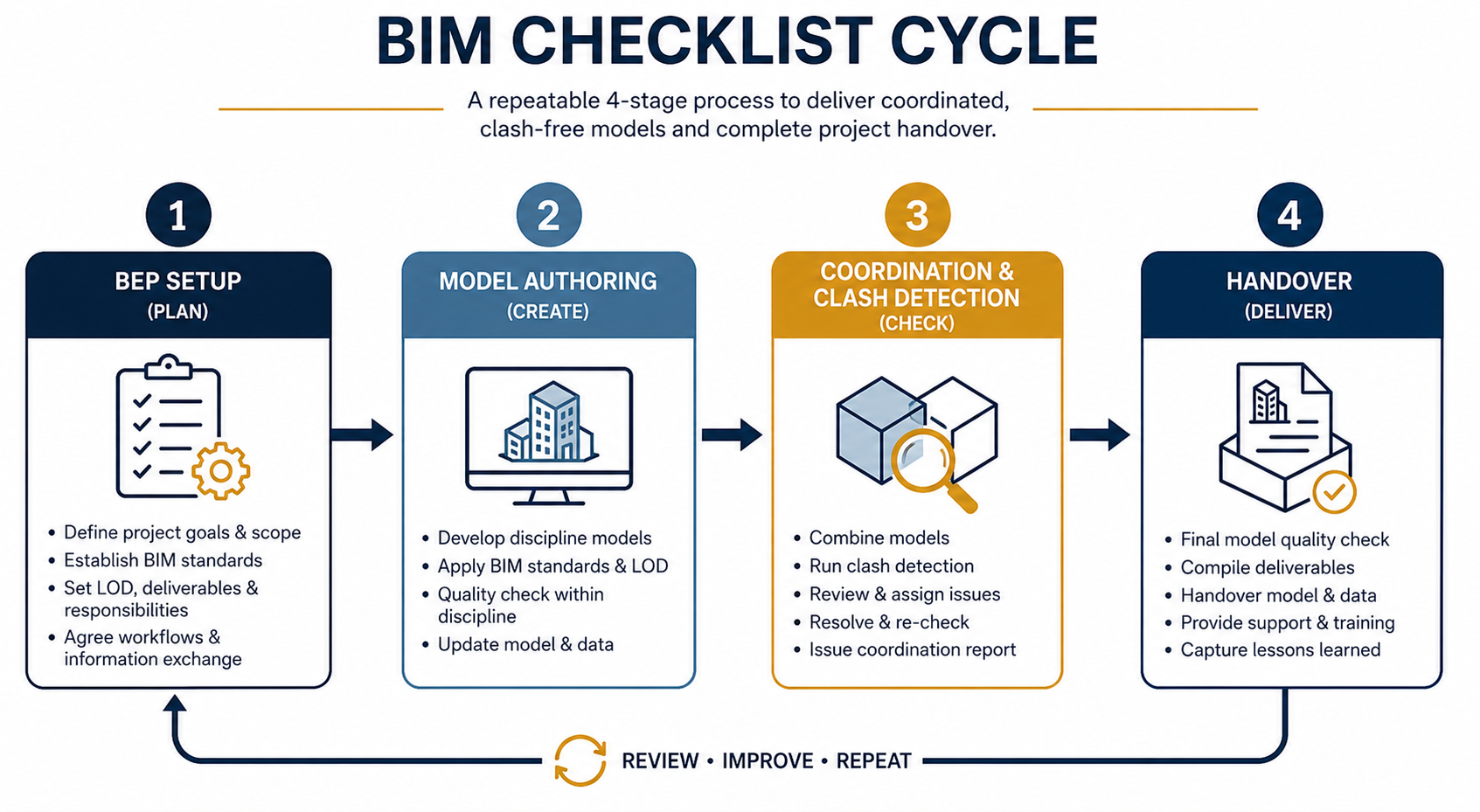
A structural engineer opens a coordinated model three weeks before pour, only to find the ductwork routing wasn’t updated after the last architectural revision. The clash goes unnoticed until a site supervisor in Lekki flags a beam soffit that’s 200mm lower than the drawings show. This is not a software failure. It’s a BIM checklist…
-

A tower crane operator on a high-rise site in Lekki gets a warning on his handset before his supervisor even radios him: a strain gauge fitted to the crane’s jib has logged a load reading outside its rated envelope. No one climbed the mast to check a dial. IoT, or the Internet of Things, is…
-
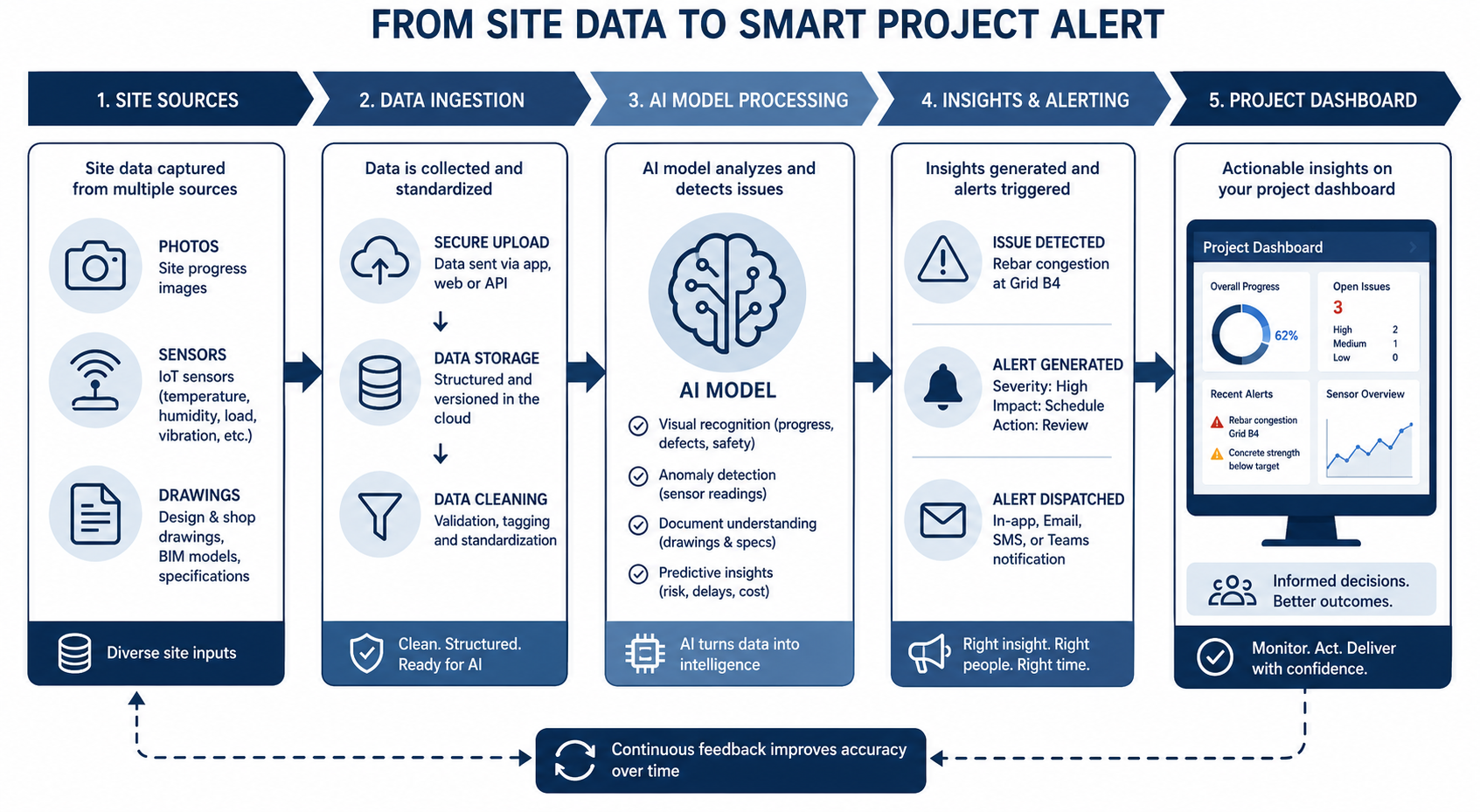
On a mid-rise residential site along the Lekki-Epe corridor, a site engineer spends Monday morning walking the slab formwork with a tape measure and a paper checklist, cross-referencing what he sees against a drawing set that has already been revised three times this month. By the time his report reaches the project manager on Wednesday,…
-
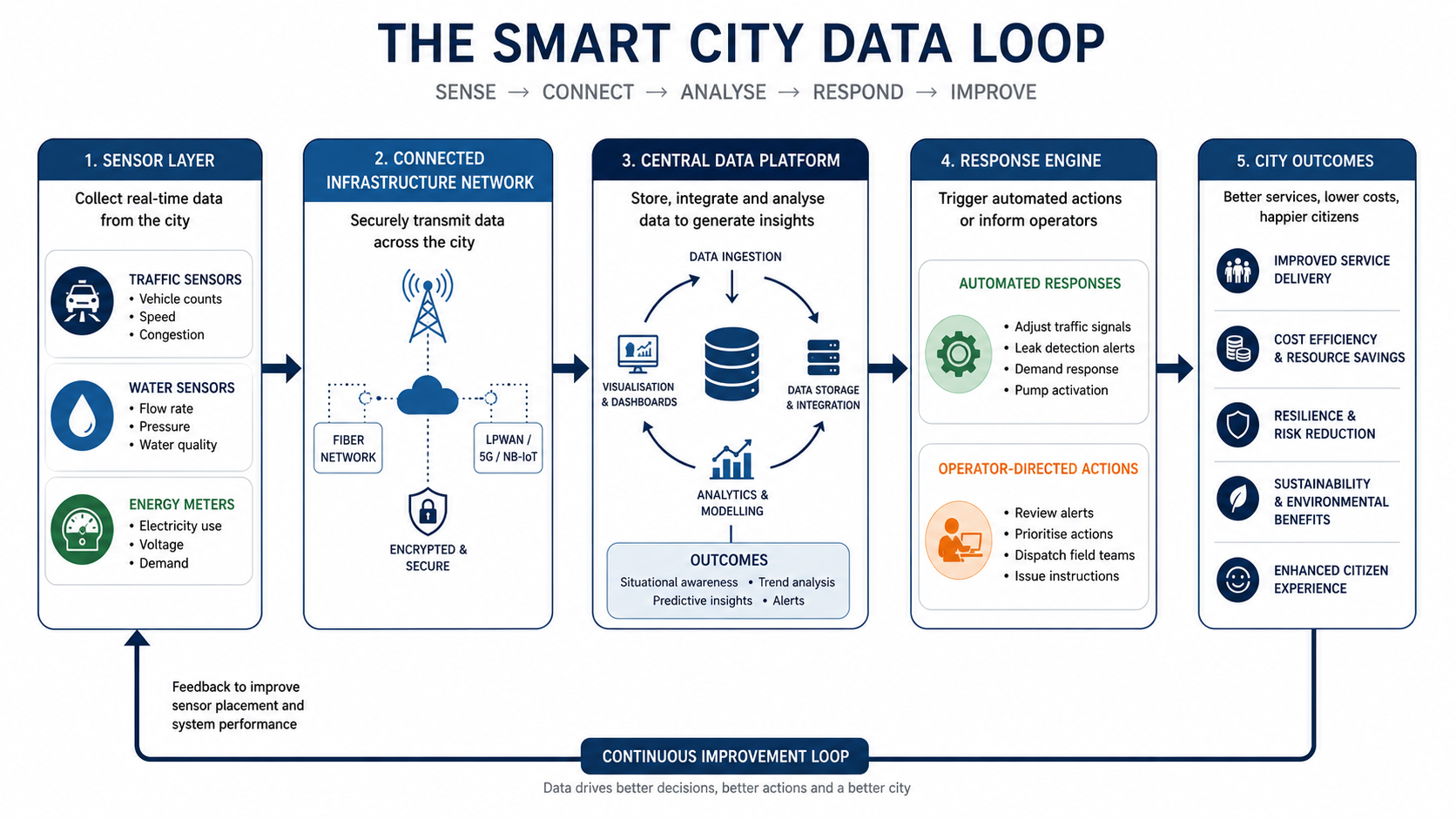
Lagos loses an estimated 3 billion naira a year in fuel and productivity to traffic congestion that could be reduced with better signal timing and real-time route data. Dubai’s RTA tracks metro ridership, road sensor data, and parking occupancy on a single dashboard used to retime signals within minutes rather than months. Both cities are…