
Author: Fadahunsi John – Lead Structural Engineer
-
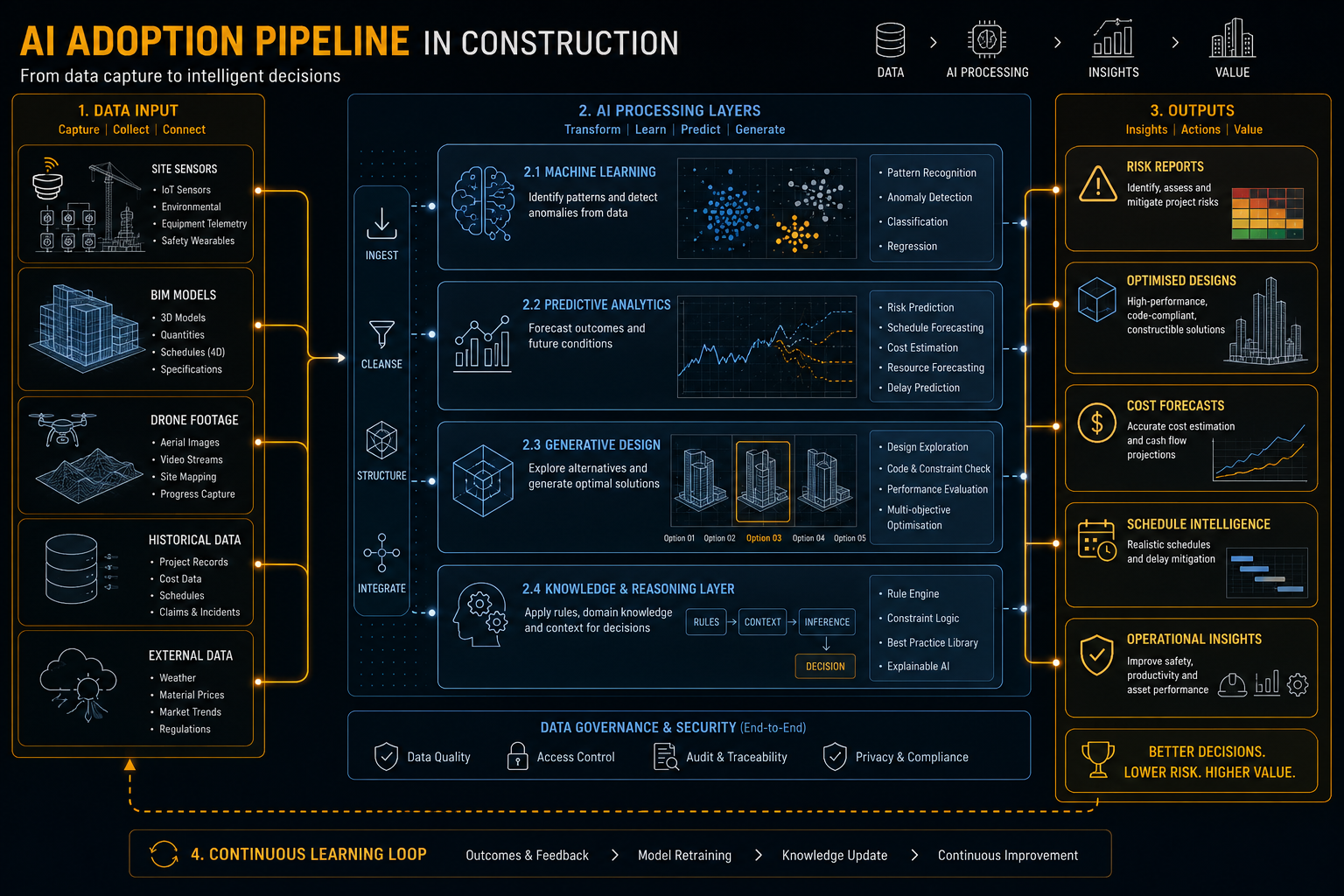
Walk onto any major infrastructure site in 2026 and the evidence is hard to ignore. Project managers are reviewing AI-generated risk reports before the morning briefing. Structural engineers are running load optimization algorithms that would have taken a dedicated team three days to process manually. Quantity surveyors are validating material estimates against machine-learning models trained…
-

Walk onto any large construction site today — a bridge rehabilitation in Lagos, a high-rise in Abuja’s Maitama district, or a port expansion in Port Harcourt — and you will likely find at least one IoT device running in the background. A vibration sensor on a formwork frame. A soil moisture probe in a temporary…
-

Walk onto a major infrastructure site in Lagos, Singapore, or Dubai today, and you will find something that would have seemed unusual a decade ago: machines carrying out tasks that previously required a crew of ten. Automated rebar tying machines work through the night without fatigue. Sensors embedded in fresh concrete transmit strength readings to…
-

A structural engineer managing a bridge rehabilitation in Lagos or a project manager overseeing a new transit terminal in Dubai faces the same question: how do you know the asset is performing as designed once it leaves the drawing board and starts carrying real loads in real conditions? Traditional inspection schedules give you snapshots. A…
-

Ask any civil engineer who has worked on an airport project and they will tell you the same thing: airports are unlike any other building type. They combine the structural complexity of a long-span industrial facility with the passenger flow logic of a transport interchange, the operational constraints of a 24-hour critical infrastructure asset, and…
-
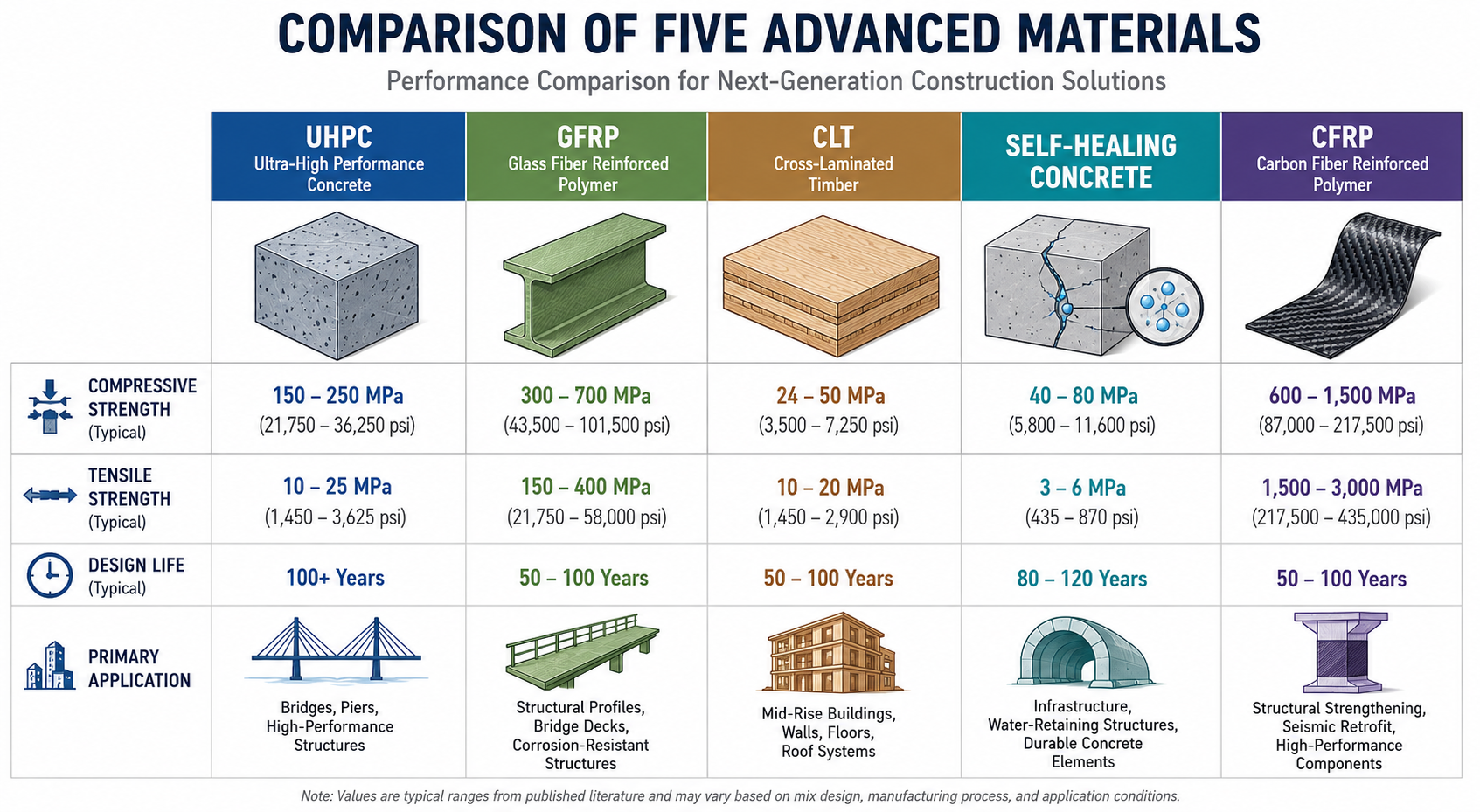
When a contractor on a bridge rehabilitation project asks why the specified repair mortar costs four times more than standard C40 concrete, the answer usually comes down to material science. Advanced materials are not a premium indulgence — they are an engineered response to performance requirements that conventional materials cannot meet. A reinforced concrete deck…
-

A road rehabilitation project in Lagos Island gets halfway through construction and runs 40% over budget. The drainage redesign alone — prompted by poor pre-contract ground investigation — costs more than the original earthworks package. This is not an unusual scenario. Across urban infrastructure projects worldwide, cost overruns trace back to a predictable set of…
-
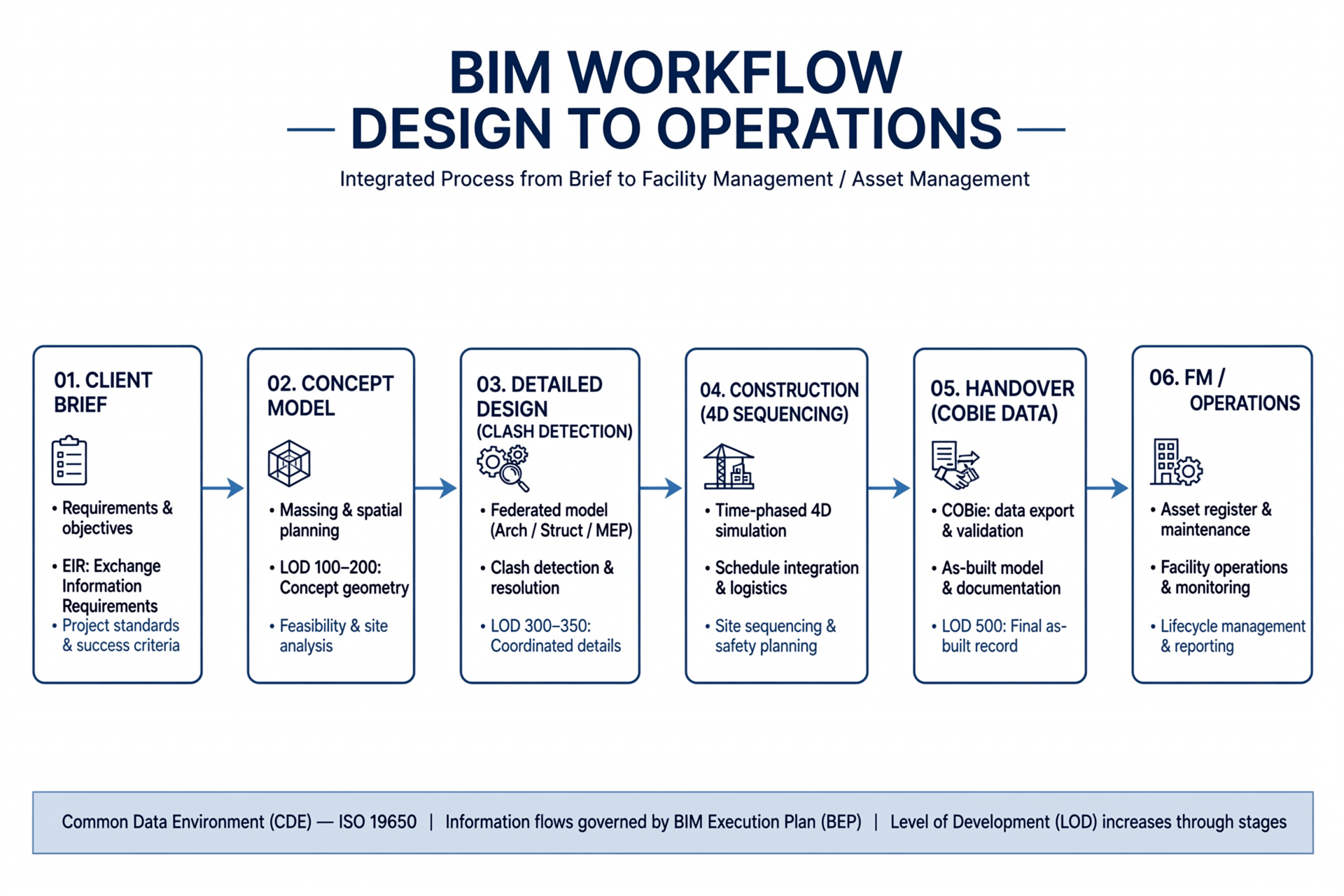
Walk into any serious project office today — whether it is a highway overpass in Abuja, a residential tower in Lagos Island, or a water treatment facility on the outskirts of Port Harcourt — and you are likely to find engineers working from a three-dimensional model that contains far more than geometry. Dimensions, materials, cost…
-
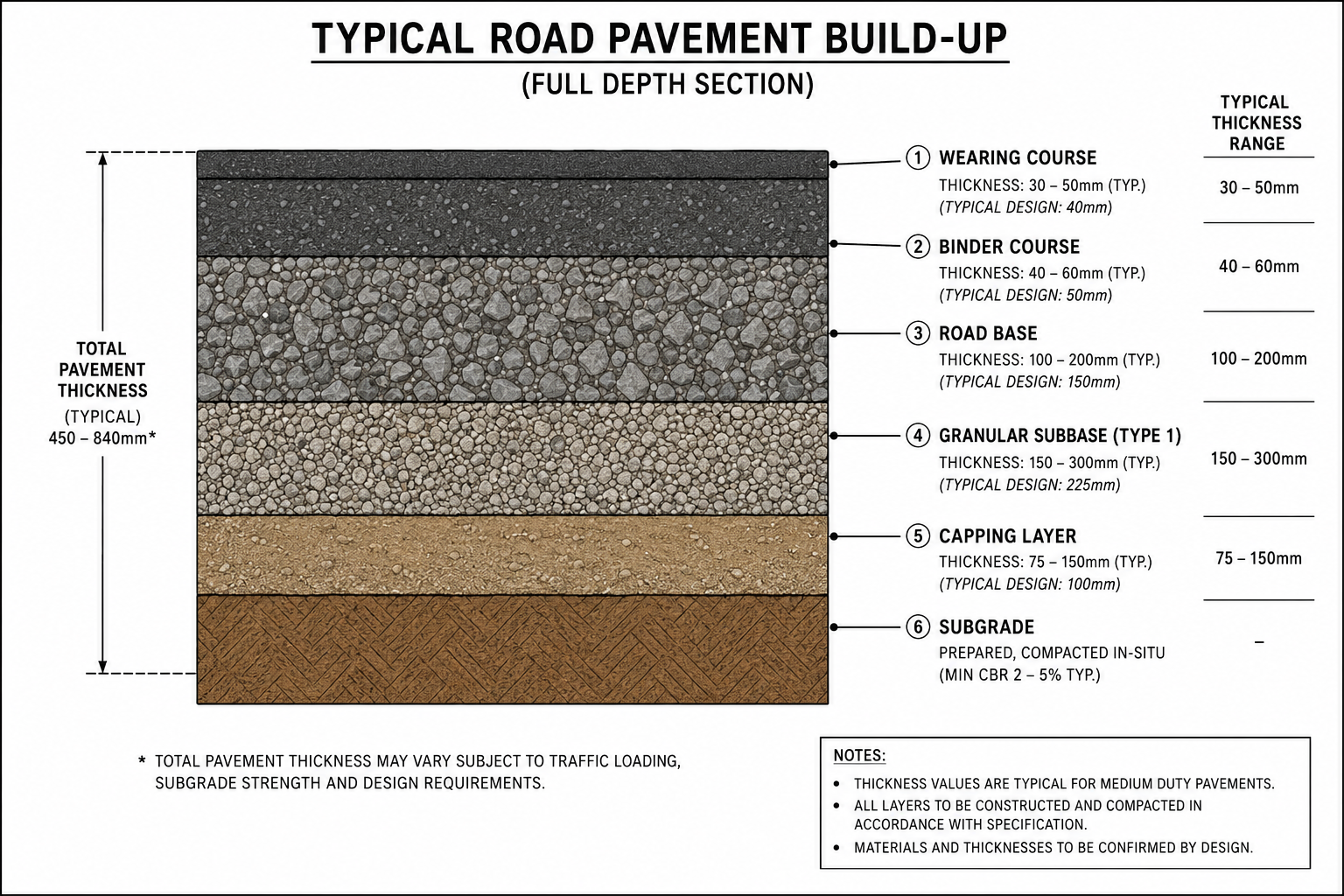
Drive over a potholed urban road after the first rains, and you quickly realise that a road is not simply tarmac poured on dirt. Roads are layered structural systems — engineered to transfer wheel loads through successive strata of bound and unbound materials down to the natural subgrade below. Get any layer wrong, and the…
-

Designing and building in the marine environment is unlike any other construction context. The sea does not forgive errors in material specification, foundation assumptions, or drainage philosophy. A port wharf that performs adequately in calm harbour conditions can face catastrophic scour during a storm surge; a jetty pile that passes visual inspection above the waterline…
-

A bridge built in 2026 looks very different from one designed a decade ago — not just aesthetically, but structurally, materially, and operationally. Across Africa, Asia, Europe, and the Americas, the profession is navigating a confluence of pressures: ageing stock that needs replacement or rehabilitation, climate events stressing structures beyond their original design parameters, tightening…
-

Buried utilities have delayed, derailed, and in some cases fatally compromised rail infrastructure projects across the UK. When a contractor strikes an uncharted 11kV cable during track drainage excavation, the consequences extend well beyond repair costs — Network Rail possession windows close, compensation events stack up under NEC4, and CDM 2015 investigations follow. The risk…
-

Walk through any major city — Lagos, London, or Los Angeles — and you are standing on a layered stack of engineered systems that most people never think about until something fails. A burst water main floods a junction. A potholed arterial road backs up freight movement for kilometres. A bridge closure forces thousands of…
-
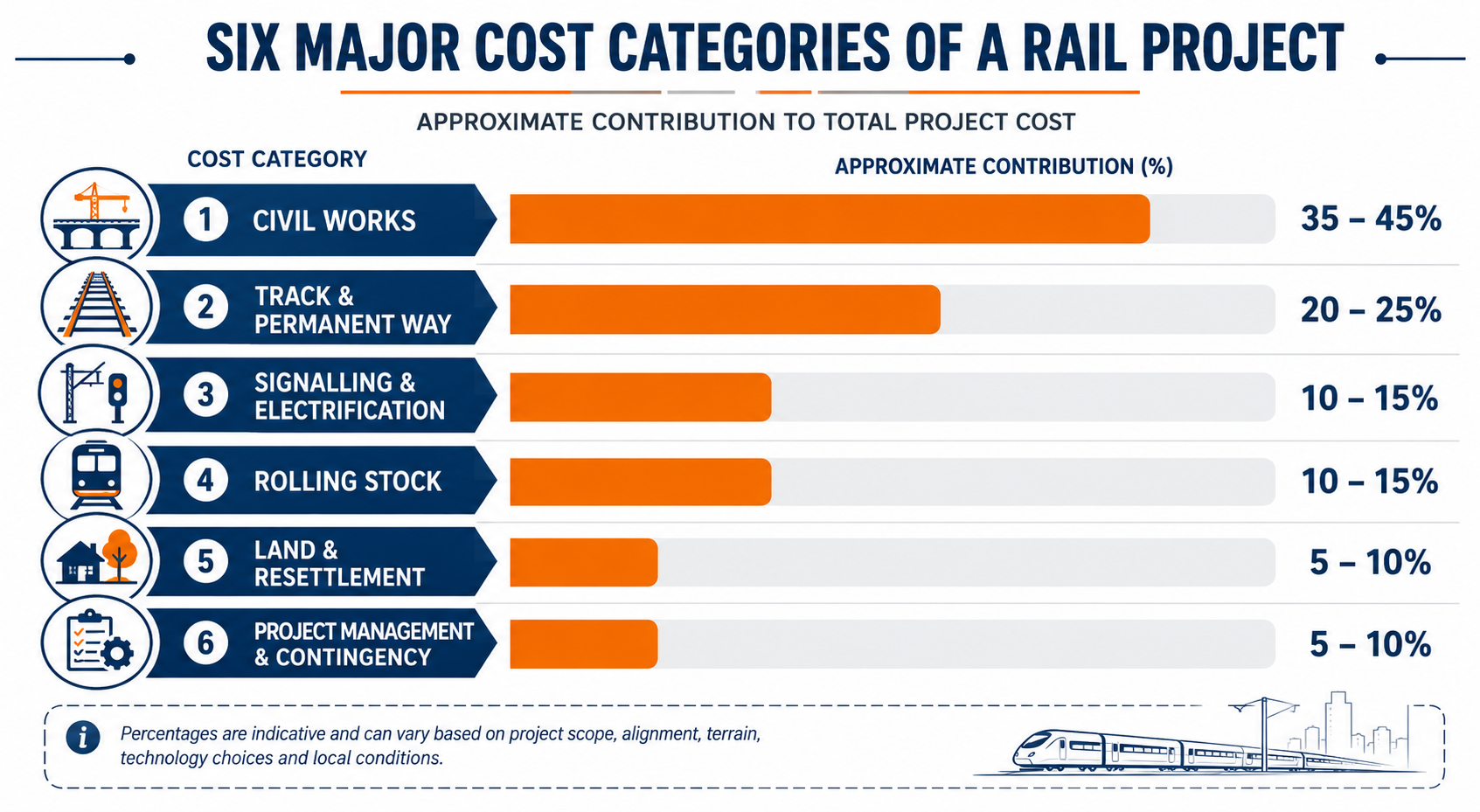
A rail project in Nigeria that looks straightforward on a feasibility study has a habit of arriving at construction with a budget that looks nothing like the original estimate. The Abuja Light Rail — completed in phases from 2016 — saw cost escalations tied to land resettlement, utility diversion, and the complexity of tunnelling through…
-

Walk onto any major airport construction site in the UAE — Al Maktoum International, the ongoing expansions at Abu Dhabi, or one of the regional airstrips serving the Northern Emirates — and the scale of coordination involved becomes immediately apparent. You have aircraft pavement carrying loads that dwarf anything a highway engineer typically encounters. You…
-

Drive along the Lagos–Ibadan Expressway after a heavy rainstorm and you will see the difference between a road that was designed and one that was merely surfaced. Potholes don’t appear because asphalt is weak. They appear because someone, somewhere, got the layer beneath it wrong — the subgrade, the drainage, the compaction, or the traffic…
-
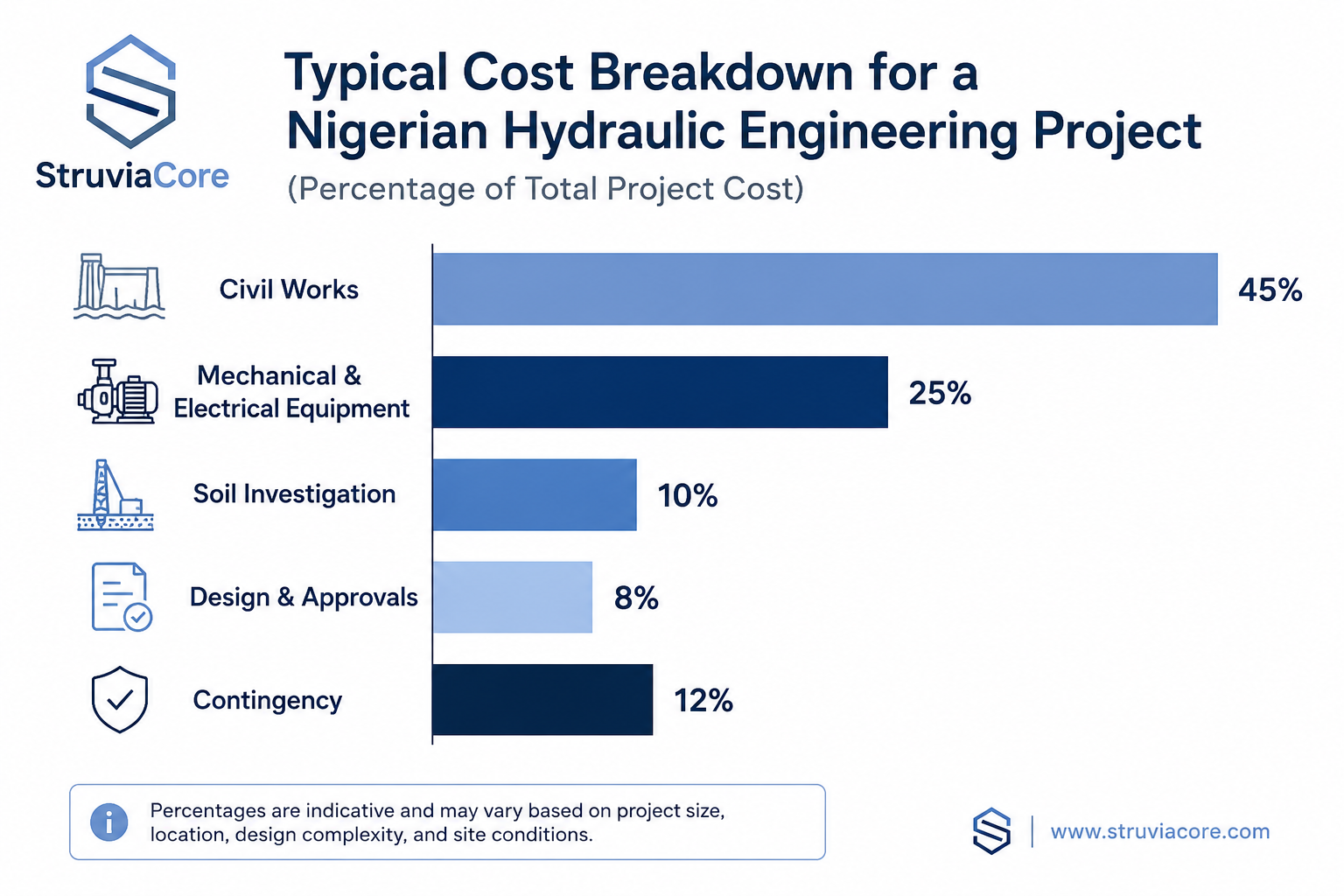
On a drainage upgrade project along the Abule-Egba axis of Lagos in 2023, the contractor’s piling rig hit soft marine clay nearly four metres deeper than the preliminary soil report indicated. The pump house foundation design had to be revised mid-construction, the piling subcontractor remobilised, and the client absorbed a cost variation that pushed the…
-
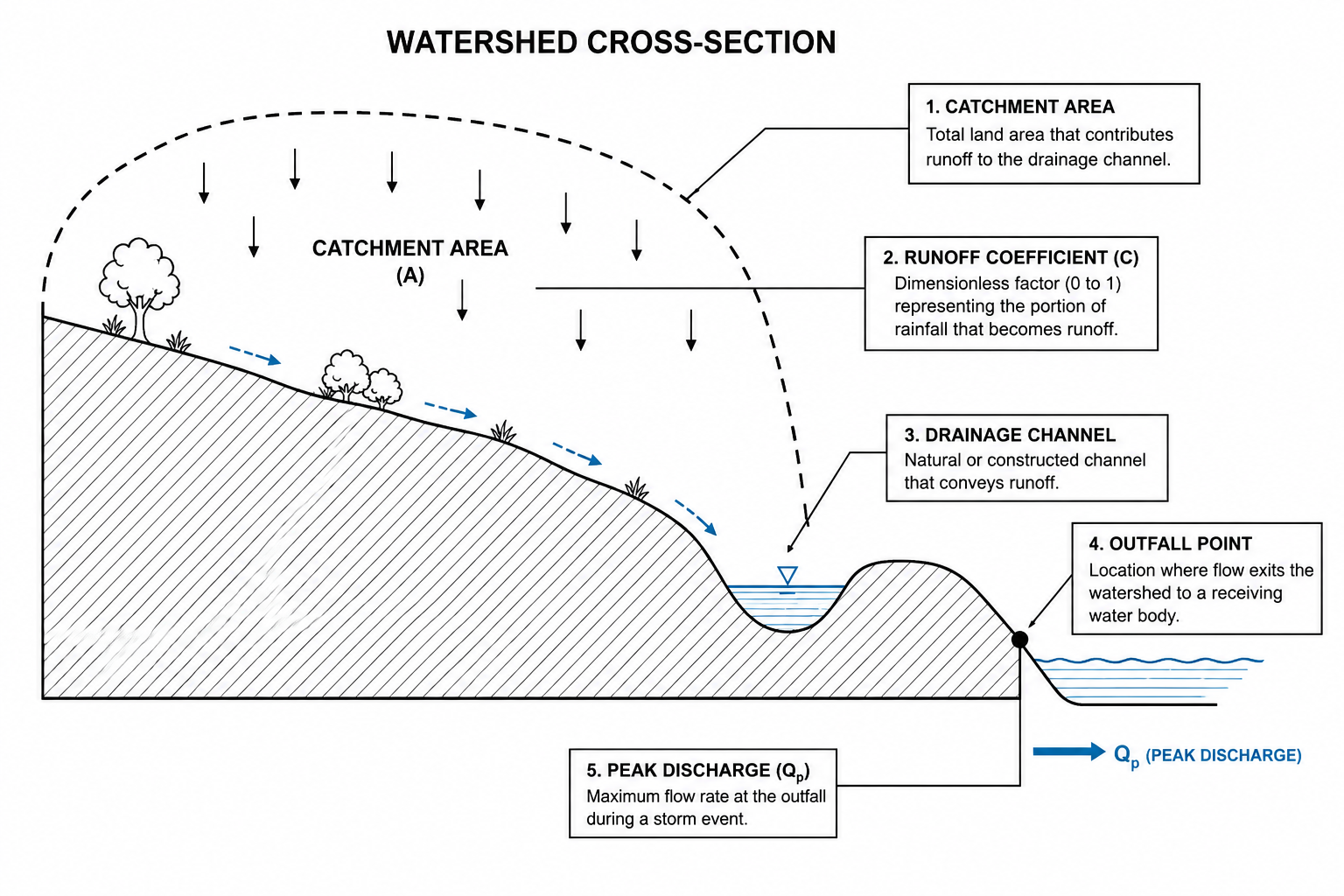
A drainage channel in Lekki backs up after forty minutes of rain, and the estate behind it floods to the doorstep. The contractor blames the storm. The resident blames the drainage contractor. Neither has actually measured the catchment area feeding that channel, and that is where most water resources failures begin — not in the…
-
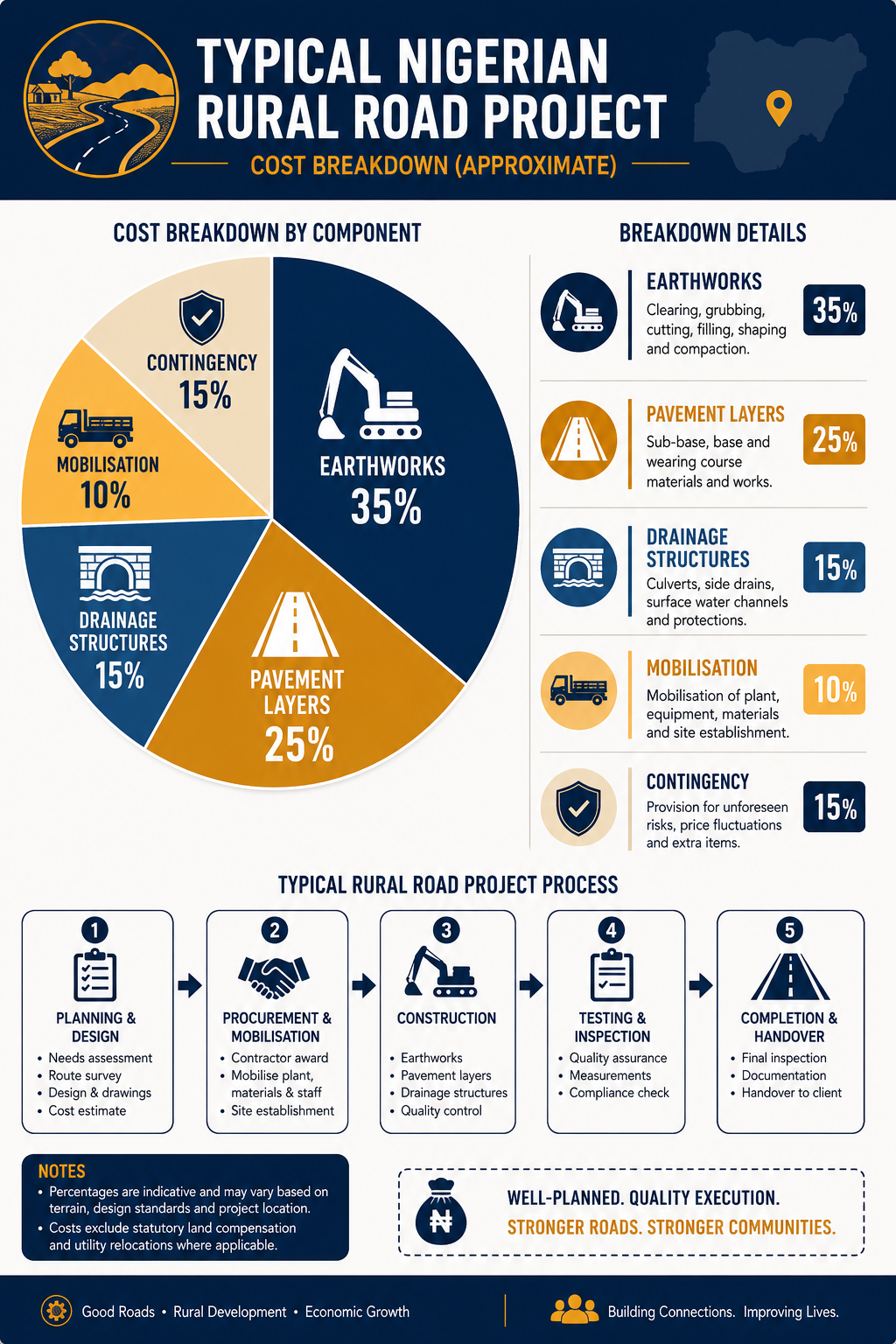
A site engineer reviewing a bill of engineering measurement and evaluation (BEME) for a 12km rural access road in Ogun State recently found that earthworks alone consumed 38% of the contract sum — far above the 20-25% typically budgeted. The cause was not poor estimating. It was a soil profile that shifted from lateritic gravel…
-
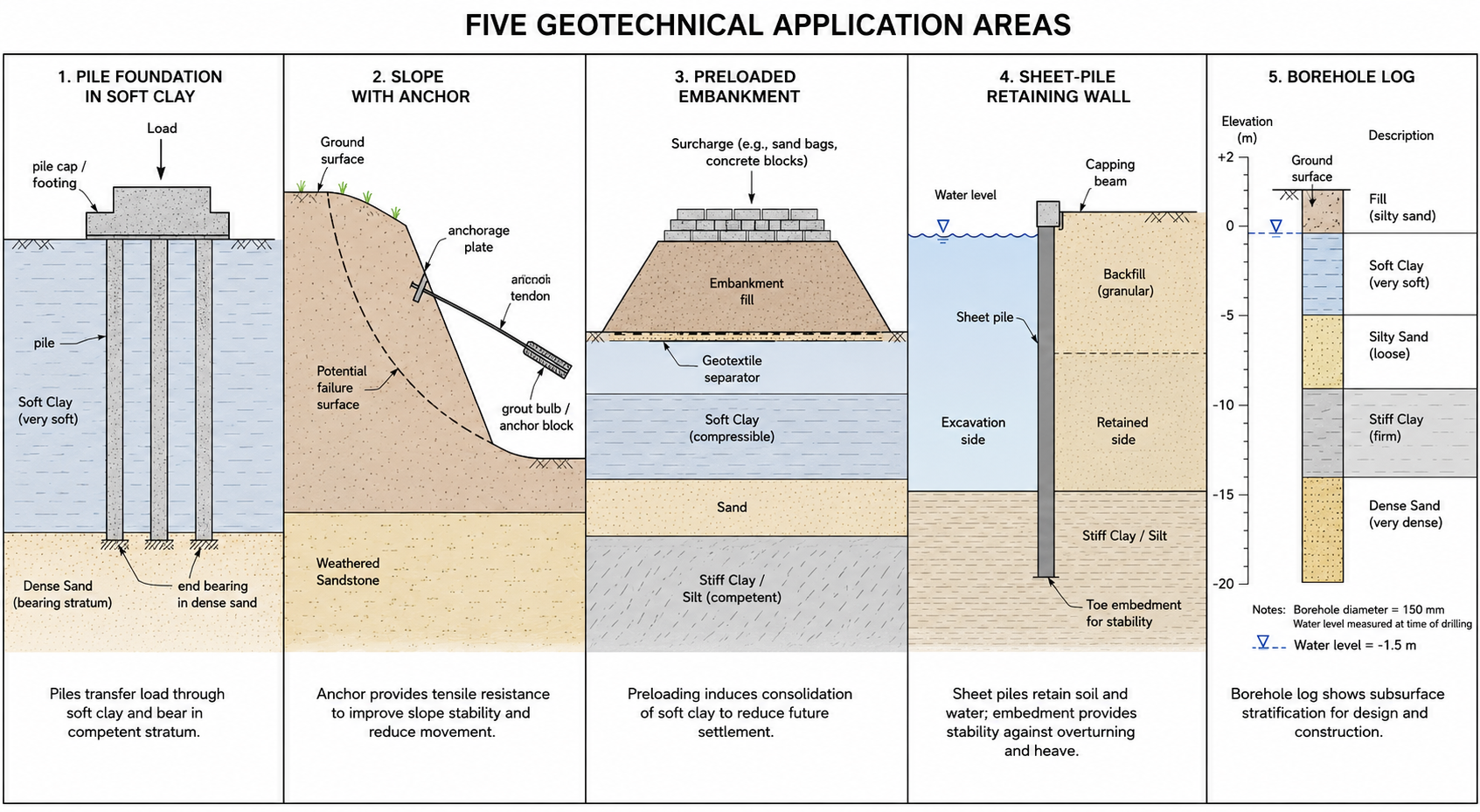
A 12-storey residential block in Lagos Island begins to settle unevenly six months after handover. Cracks propagate through the ground-floor columns. The structural engineer checks the frame — it’s fine. The problem started below the surface, where fill material of variable compressibility was never properly characterised before construction began. This is geotechnical engineering failure at…